37+ Opps Meaning in Text Message: Powerful Slang, TikTok & Chat Meaning
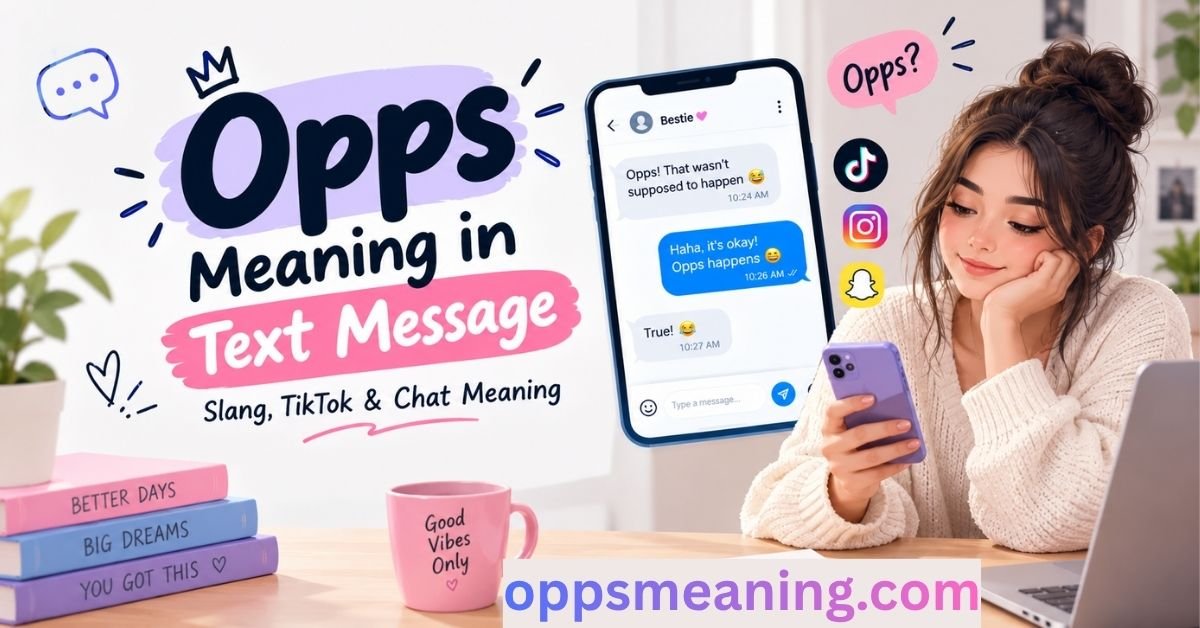
Someone just texted you “don’t tell the opps.” Maybe your feed is full of comments like “the opps are watching 👀.” You’re not alone if you paused and thought, wait, what does that even mean? This guide breaks down opps meaning in text messages in plain, easy English. You’ll learn where the word came from, how it shows up on TikTok, Instagram, and in group chats, and why the same three letters can mean something playful one minute and something serious the next.
What Does Opps Mean in a Text Message?
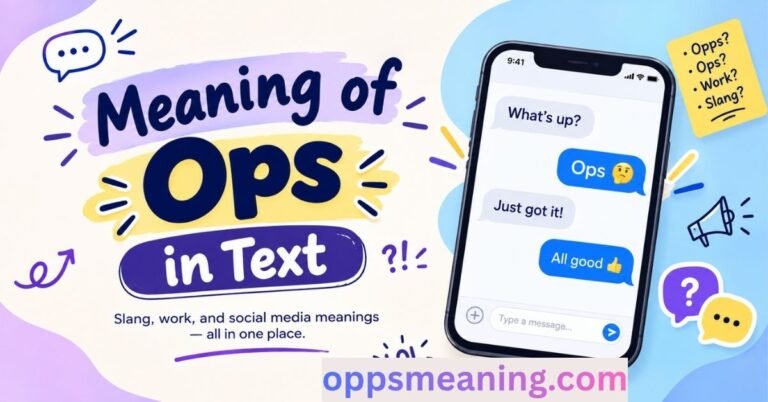
In simple terms, opps meaning in text message points to opponents, rivals, or enemies. It describes people someone considers to be on the opposing side. The word can be light and joking, or it can be dead serious. That range is exactly what makes it confusing for people outside the slang.
Merriam-Webster even recognizes this slang meaning, defining “opps” as one’s opposition or opponents. So this isn’t some made-up internet nonsense. It’s a real word with real roots, just used loosely across texting slang and social media slang today.
Simple Definition of Opps
At its core, opp meaning is short and simple. An opp is one opponent or rival. Opps just means more than one. That’s it grammatically. The real work is figuring out tone.
Depending on the chat, an opp could be people someone dislikes, people considered enemies, a rival gamer, a competing group, or even a friend being teased for something small. The word flexes hard based on context, and that flexibility is the whole story here.
Opps Meaning in Texting and Chat
In everyday text message slang, “opps” rarely shows up alone. It usually rides along with tone markers like emojis, punctuation, or capital letters that hint at how serious the sender really is. A message like “don’t tell the opps 😭” reads very differently than one with no emoji at all.
Texting strips out tone of voice, so people lean on slang like this to fill that gap. Calling someone an opp in a text can express playful rivalry, mild irritation, or genuine distrust. Reading the whole conversation, not just the word, is the only reliable way to know which one you’re dealing with.
Opp vs. Opps: What’s the Difference?
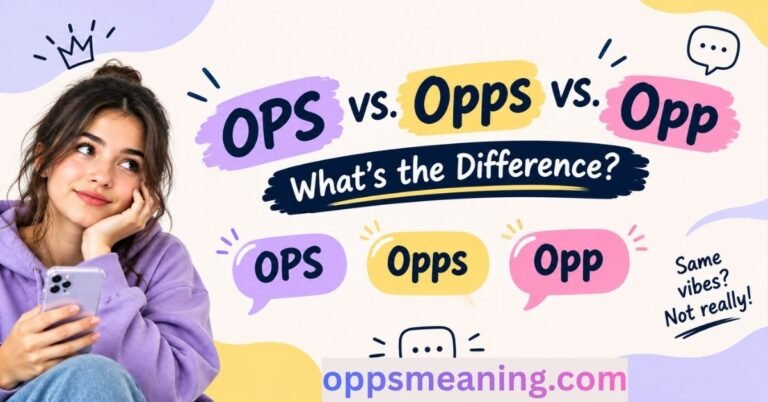
The difference is simple. Opp is singular. Opps is plural. “He’s an opp” talks about one person. “They’re the opps” talks about a group.
| Term | Meaning | Example |
| Opp | One opponent or rival | “He’s an opp now.” |
| Opps | Multiple opponents or rivals | “The opps are outside.” |
Grammar-wise, that’s the whole difference. Everything else, like whether it’s a joke or a genuine warning, comes down to context and tone.
Origin and Background of Opps
The word opp grew directly out of “opponent” and “opposition.” Shortening words like this is common in slang, especially in fast-moving spaces like group chats, comment sections, and lyrics. Opposition got clipped down, and “opp” stuck.
Its rise is closely tied to rap and hip-hop vocabulary, where the term described real rivals or hostile rivals in serious situations. From there, it spread into gaming communities and meme culture, picking up a much lighter tone along the way. Today it lives comfortably in both worlds at once.
From Serious Rivalry to Everyday Slang
In its earlier, heavier use, “opp” described actual rival groups and genuine conflict. That serious weight hasn’t disappeared. It still shows up in conversations about real hostility and interpersonal conflict.
But modern slang loves taking a heavy word and applying it to something tiny. “My sister ate the leftovers. She is an opp now.” Nobody thinks a missing slice of pizza started a war. The humor comes from stretching a serious-sounding word over a situation that clearly doesn’t deserve it.
How Social Media Changed the Meaning of Opps
Social media slang did more to spread this word than almost anything else. TikTok slang, Instagram slang, and gaming chats introduced “opp” to millions of people who’d never encountered its more serious background.
Now people jokingly call a rival gamer an opp, an ex an opp, or even a clumsy pet an opp for knocking over a drink. Online slang like this spreads fast because it’s short, dramatic-sounding, and endlessly adaptable to new inside jokes.
How Opps Is Used in Real-Life Conversations
Text message examples make this word so much easier to understand than any dictionary definition could. Context, timing, and emojis all shape whether “opp” means something serious or something silly.
Below are four short conversations from different platforms. Each one shows a different shade of meaning, from playful teasing to real suspicion.
WhatsApp Friend Group Example
In one WhatsApp conversation, Person A asks, “Are we inviting Ryan tonight?” Person B replies, “After he exposed our group chat? That man is an opp 😭” Person A pushes back, “You’re still mad about that?” Person B answers, “Absolutely.”
Here, “opp” signals someone seen as disloyal, but the crying emoji softens it. This reads like half real annoyance, half performance for the group.
Read More About: 36+ Amazing FML Meaning Slang: What Does FML Mean in Text & Social Media?
Instagram DM Example
In an Instagram DM, Person A teases, “You seriously support their team?” Person B laughs it off, “Yep 😂” Person A responds, “Wow. Didn’t know I was talking to an opp.” Person B shrugs, “You’ll survive.”
This is playful rivalry, plain and simple. Nobody here means a real enemy. It’s closer to flirty banter dressed up in rivalry language.
TikTok Comment Example
Under a video, one of the TikTok comments reads, “My little brother ate the food I saved.” Another user replies, “Your own family became the opps 💀”
The exaggeration is the entire joke. Treating a sibling like a criminal mastermind over stolen food is funny precisely because it’s so over the top.
Text Message Example
In a plain text conversation, Person A asks, “Why were you telling them what we said?” Person B answers, “I wasn’t.” Person A responds, “You keep giving information to the opps.”
There’s no joke signal here, no emoji, no laughing tone. This version reflects genuine distrust, not comedy. It’s a good example of calling someone an opp with real weight behind it.
Opps Meaning in Different Contexts
The word shifts shape depending on where you find it. Opps on social media can mean something completely different than opps in gaming, even though the root idea stays the same.
Understanding these settings helps you read tone correctly the first time, instead of guessing.
Opps on TikTok and Social Media
Opps on TikTok often turn ordinary attention into a joke about surveillance. Comments like “the opps found my account” or “can’t even post peacefully, the opps are everywhere 😭” treat normal online activity like a spy thriller. It’s an exaggeration for laughs, not a real warning.
Opps Between Friends
Opps between friends almost always means teasing. “You didn’t save me a seat? Opp behavior.” The word borrows enemy language but applies it to something completely harmless, which is exactly what makes it funny to the people involved.
Opps in Dating and Relationships
Opps in dating and relationships can carry more emotional texture. An ex might get called an opp jokingly, or with real tension behind it, like “my ex liked the post, the opps are monitoring me.” It can also work as affectionate teasing between partners, such as “you watched the episode without me? You’re an opp.”
Opps in Gaming
In gaming spaces, the word barely counts as slang anymore. Opps in gaming simply means the opposing players. “The opps are pushing” or “beat the opps” are close to standard gaming slang, used constantly with no dramatic weight attached at all.
Opps in Serious Conflict
Opps in serious conflict is where caution matters most. If threats, violence, or real hostility surround the conversation, this word likely means exactly what it sounds like. It’s important not to treat every use of “opp” as harmless meme talk, because context can flip the meaning entirely.
What Does Opps Say About Someone’s Emotions?
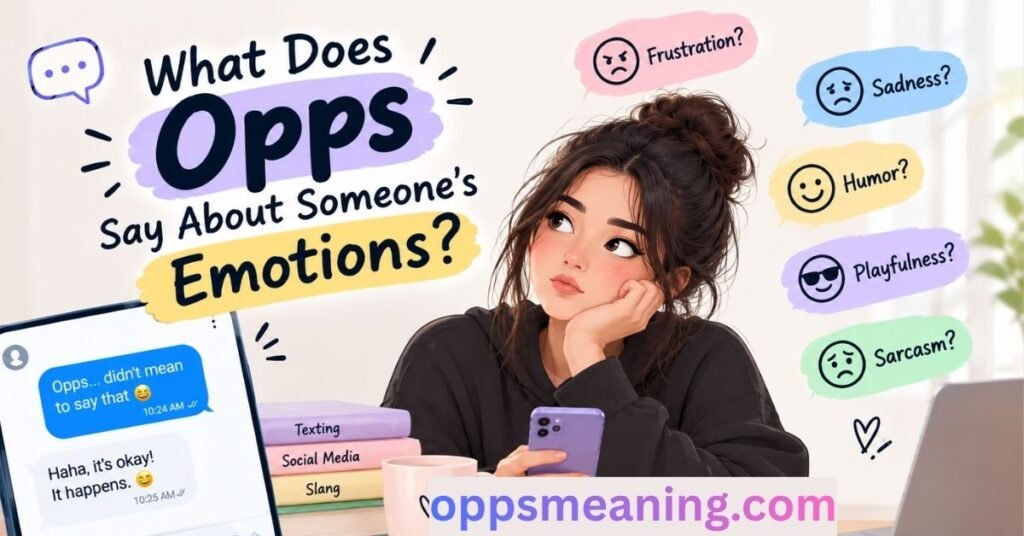
Underneath the jokes, this word draws a simple line: us versus them. That division is the emotional engine behind almost every use of “opp,” whether the tone is playful or completely serious.
As one online commenter put it, “calling someone an opp is just a fast way of saying they’re not on my side anymore.” That captures the idea well. The word compresses a whole relationship judgment into one short label.
Opps Can Show Distrust or Suspicion
A line like “I don’t mess with him, he’s an opp” often signals distrust. It can mean untrustworthy, disloyal, or simply connected to people the speaker doesn’t like. This use draws quiet social boundaries without needing a long explanation.
Opps Can Turn Conflict Into Humor
Friends often exaggerate tiny betrayals for entertainment. If your best friend picks someone else as a teammate, texting “wow, so you’re an opp now?” isn’t a real accusation. It’s humor, dramatizing something small because both people know the difference between the joke and reality.
Read More About: 35+ Delulu Meaning in Text: Ultimate Fun Definition, Examples & Usage
Opps Can Show Group Loyalty
Calling someone an opp can also reinforce group identity. It quietly says, “you’re not with us.” That’s harmless in a sports rivalry, but it carries more weight during genuine friendship drama or interpersonal tension. Tone really does decide everything here.
Common Misunderstandings About Opps
A few mix-ups come up constantly around this word, and clearing them up avoids awkward misreadings in chats.
The most common one involves spelling, but a couple of meaning-based questions come up just as often, especially from people newer to the slang.
Opps vs. Oops
Opps vs. oops confuses plenty of people at first glance. “The opps are here” means rivals showed up. “Oops, I deleted it” means someone made a mistake. One extra letter, completely different message.
Does Opp Mean Police?
Not typically. Opp meaning usually points toward opposition or rivals, not law enforcement. Some small or niche communities may develop their own local twists, and unrelated abbreviations using the same letters do exist separately.
Does Opp Mean Enemy?
Often, yes, though “enemy” can sound far more intense than what’s actually meant. If a friend calls you an opp over the last cookie, “playful rival” fits the moment much better than “serious enemy.”
Is Opp Always Gang Slang?
No, and this is a common assumption worth correcting. While the word does appear in serious street-conflict contexts, it has spread widely into gaming, sports talk, meme culture, and everyday joking between friends.
Common Opps Variations and Phrases
Slang rarely stays in one fixed form for long. Opps slang has branched into several common phrases, each with a slightly different flavor.
The table below lays out the most frequent variations, along with a short example for each one.
| Phrase | Meaning | Example |
| Opp | One opponent or rival | “He’s an opp now.” |
| The Opps | A specific rival group | “The opps showed up.” |
| My Opp | A personally chosen rival | “That’s basically my opp.” |
| Certified Opp | Someone clearly on the other side | “She’s a certified opp 😂” |
| Secret Opp | Someone friendly on the surface, suspected of working against you | “You celebrated my loss, secret opp?” |
| Opp Behavior | Anything disloyal or unfriendly | “Eating my leftovers is opp behavior.” |
| Moving Like an Opp | Acting suspicious or rival-like | “Why are you moving like an opp lately?” |
| The Opps Are Watching | Rivals or unwanted observers paying attention | “The opps are watching 👀” |
| Became an Opp | Someone formerly friendly now treated as a rival | “He joined their team and became an opp.” |
Each version keeps the same core idea of opposition, just applied to slightly different situations, from a single person to an entire suspected group.
When Should You Not Use Opps?
Casual slang like this doesn’t belong everywhere. Knowing when to avoid it saves you from sounding unclear or, worse, unintentionally hostile.
A few settings call for plain, standard vocabulary instead of slang terms like “opp,” no matter how normal the word feels in a group chat.
Formal Communication
In formal communication, skip lines like “our company must outperform the opps.” Words like “competitors,” “rivals,” or “the opposition” read far more professionally in emails, reports, or workplace messages.
Academic Writing
Unless the assignment is literally about analyzing slang, academic writing should stick with “opponents” or “opposition.” Slang terms tend to undercut credibility in essays and research papers.
Serious Disagreements
During serious disagreements, using “opp” risks escalating tension if the other person doesn’t realize you’re half-joking. Clear, direct language usually works better when emotions are already running high.
Read More About: 34+What Does ATP Mean in Text? Ultimate Modern Slang Meaning Explained
When Someone Doesn’t Know the Slang
If you’re talking to someone unfamiliar with internet or youth slang, “opps” might just read as a typo for “oops.” Spelling things out avoids confusion entirely, especially across generations or cultures.
How to Respond When Someone Calls Someone an Opp
The right reply depends completely on tone. A joking “opp” label deserves a joking response, while a serious one deserves a more grounded reply.
The table below breaks down reply styles by mood, giving a few natural-sounding options for each situation.
| Reply Style | Example Responses |
| Casual | “Since when? 😭” or “I thought we were friends.” |
| Funny | “The betrayal arc begins.” or “Opp status unlocked.” |
| Mature | “What do you mean by that?” or “I’d rather clear this up directly.” |
| Respectful | “Don’t call me that.” or “I’m not trying to be against you.” |
Matching your tone to theirs keeps the conversation smooth. Mismatched tone, like joking back after a genuinely serious accusation, can make things worse instead of better.
Regional and Generational Use of Opps
Opps slang started in English-speaking spaces, but global internet culture doesn’t respect borders. The word has traveled far beyond its original communities.
Different regions and age groups have picked it up in slightly different ways, shaped by local online communities and exposure to English-language media.
Western Internet Culture
In English-speaking digital spaces, the word ranges from genuine rivalry talk to complete meme material. Western internet culture treats it as flexible, everyday casual slang now, used constantly across chats and comment sections.
Asian Online Culture
Younger users across Asian online communities often pick up “opp” through English-language gaming, rap, and TikTok exposure, even when English isn’t their first language. Local slang still varies a lot from one community to another, though.
Middle Eastern Online Culture
A similar pattern shows up in Middle Eastern online spaces, especially among people regularly engaged with global gaming and social media culture. The word blends naturally into mixed-language conversations online.
Global Internet Usage
Across global internet culture, the term moves easily between gaming lobbies, meme pages, music fan communities, and sports discussions. It keeps its core opposition meaning while growing more humorous the further it drifts from serious disputes.
Gen Z vs. Millennials
Gen Z slang leans heavily ironic, with lines like “my mom said no McDonald’s, biggest opp” being fairly typical. Millennials familiar with gaming or current platforms usually follow along fine too, while people outside those circles may just see it as unfamiliar youth slang.
Is Opps Safe for Kids?
The word itself isn’t explicit or inappropriate. A child might use it casually about a rival sports team or a gaming opponent without any real weight behind it at all.
Context still matters, though. Because “opp” can also appear in conversations involving genuine hostility, threats, or conflict, adults shouldn’t assume every instance carries the same harmless meaning. “Our football opps beat us” and a conversation involving real threats against real people are worlds apart. Looking at the surrounding conversation, rather than reacting to a single word, gives a much clearer picture.
FAQ,s
Here are quick, direct answers to the most common questions people ask about this slang term.
What does opps mean in a text message?
It means opponents, opposition, rivals, or enemies, describing people on the other side, whether the tone is joking or genuinely serious.
What does “opp” mean from a guy?
The meaning stays the same no matter who says it. It usually points to a rival or someone considered part of the opposing side, though between friends it’s often just teasing.
What does “opp” mean from a girl?
There’s no gender difference in meaning here either. It can point to an opponent, rival, or someone seen as mildly disloyal, almost always shaped by the surrounding tone.
What does “the opps” mean on TikTok?
Opps on TikTok usually refers to rivals or unwanted observers, often used humorously for exes, haters, competing groups, or anyone watching someone’s posts a little too closely.
Is it opps or oops?
They’re different words entirely. “Opps” means rivals or opponents. “Oops” is what someone says after making a mistake.
Is calling someone an opp an insult?
It can be, depending on delivery. In a serious context, it signals real hostility or distrust. Among friends, it’s usually playful teasing with very little real edge behind it.
What does “opp behavior” mean?
Opp behavior describes acting disloyal, unfriendly, or rival-like, often through a small betrayal or disagreement. Online, it’s frequently exaggerated purely for comedic effect.
Conclusion
At the heart of it, the opps meaning always circles back to opposition. An opp is a rival, opponent, or enemy, and opps simply means more than one. Modern texting, though, rarely lets a word sit still, and this one has stretched across gaming, dating, sibling arguments, and genuine conflict alike.
“The opps are outside” might describe something genuinely tense. “The opps beat us in ranked” almost certainly just means someone lost a video game. Same word, wildly different stakes, and reading the surrounding conversation is really the only reliable way to know which one you’re looking at.

Ethan Brooks is a language writer who shares simple explanations of word meanings, grammar, phrases, slang, and everyday expressions. His goal is to make confusing language easy to understand with clear and helpful information.