79+ Meaning of Ops in Text: Complete Guide to Slang & Work Meanings

Meaning of Ops in Text can vary depending on the conversation. In texting and social media, “ops” often refers to opponents, rivals, or people someone has conflict with.
The Meaning of Ops in Text can also be different in work or business conversations, where “ops” is commonly used as a short form of “operations.” That is why context is important when understanding the word.
In this guide, we’ll explain the Meaning of Ops in Text, including its slang meaning, workplace use, social media examples, and the difference between “ops” and “opps.”
What Does “Ops” Mean in Text?
The word ops carries two totally separate meanings. In casual texting and social media, it usually means enemies, rivals, or opposing people. In business and technology operations, it’s just short for “operations.” Neither meaning is wrong. The trick is knowing which one applies.
Context decides everything here. A teenager texting a friend about a rival gaming team means something different than a manager emailing about the “ops team.” Once you understand both sides, the confusion clears up fast.
Ops Meaning in Slang
In ops meaning slang, the word refers to opponents, rivals, or people someone considers enemies. It grew out of street culture and spread through music and gaming. Someone might say “watch out for the ops” to mean “watch out for the people who don’t like you.” It sounds intense, but it’s often used casually too, even as a joke between friends.
Ops Meaning as Operations
The professional side is much simpler. Here, ops meaning operations just means the daily work of running a business or a system. You’ll hear it in phrases like “IT Ops,” “Sales Ops,” or “the operations department.” There’s no hidden drama in this version. It’s pure workplace communication.
Quick Meaning of Ops
Short on time? Here’s the fast answer. Ops usually means opponents or rivals in slang, and it means operations in business. Check the setting first. A text from a coworker almost always means the second one.
Why Is “Ops” Confusing?
The confusion comes from spelling overlap and dual meanings. Several similar-looking words exist, and they don’t all mean the same thing. This trips people up constantly, especially in casual conversations where tone is hard to read.
Let’s clear up the three most common mix-ups below.
Ops vs Opps
Ops vs opps is really just a slang spelling difference. Both refer to the same thing, which is enemies or rivals. Some people prefer the shorter version. Others like the doubled letter because it looks more dramatic in a caption or a text. Either way, the meaning stays the same.
Ops vs Opp
Here’s where singular and plural matter. “Opp” usually refers to one specific rival. “Ops” refers to more than one, or to the whole opposing side as a group. Think of “opp” as one person, and “ops” as the crew.
Ops vs Oops
This one causes actual mistakes. “Oops” is an exclamation for a small mistake, like dropping your phone. “Ops” has nothing to do with mistakes at all. Autocorrect sometimes swaps these, so double check before you hit send.
Where Did the Slang Meaning of Ops Come From?
The slang version of ops didn’t appear overnight. It grew out of a mix of gaming culture, music, and online communities over the years. Each one added its own flavor to the word.
Understanding the roots helps explain why the word feels so loaded today, even when it’s used lightly.
How Gaming Popularized “Ops”
Gaming culture played a huge role here. Military-style shooter games used “ops” as short for missions and operations long before texting slang picked it up. Titles built around combat missions made the word familiar to millions of players. Over time, gamers started using “ops” casually in gaming chat to describe opposing players or enemy teams during a match.
Read More About: 76+ Dash (-) Meaning in Text Message: Powerful Guide to What “-” Means
Influence of Hip-Hop and Rap Culture
Hip-hop culture and rap culture pushed the word even further. Artists used “ops” in lyrics to describe rivals or enemies, often tied to real street conflicts. The word carried weight in songs, interviews, and social posts. Fans picked it up fast, and it spread from music into everyday slang.
How Social Media Changed Its Usage
Social media sped everything up. Once the word showed up in captions, comments, and trending videos, it stopped belonging to just one group. People across online communities started using it for playful rivalries too, not just serious ones. That shift is a big reason the word feels flexible today.
Ops Meaning in Different Contexts
Where you see the word changes what it means almost every time. This section walks through the most common places people run into ops meaning in chat, online, and in daily life.
Pay attention to the platform and the people involved. That combination usually tells you everything you need to know.
Ops in Social Media
On social media, “ops” often shows up in captions or comment threads. It’s usually playful, sometimes dramatic, and rarely meant literally.
Ops in Gaming
Inside gaming culture, “ops” almost always means opposing players or the opposing team. It’s a normal part of match chatter and doesn’t usually carry personal anger.
Ops in Text Messages
In regular text messages, the meaning depends entirely on who’s sending it. Friends might use it jokingly. Others might mean it seriously.
Ops in Instagram and Snapchat
On these apps, Instagram DM conversations often use “ops” in a teasing or dramatic way, especially between friends messing around.
Ops in TikTok
TikTok comment sections use “ops” constantly, often for humor. A funny video about a rivalry might get flooded with “the ops are shaking” style comments.
Ops in Hip-Hop and Music
In lyrics and interviews, “ops” still carries its original, more serious weight, tied closely to rivalry and real-life conflict.
Ops in Workplace and Business
In ops in business settings, the word switches meaning completely. Here it means daily operations, workflows, and the people who keep things running.
Ops in Technology
In tech, you’ll see terms like DevOps and IT Ops constantly. These describe the systems and teams that keep software and networks running smoothly.
Ops in Real-Life Text Conversations
Seeing the word in action makes everything click faster than any definition can. Below are quick examples from different platforms and settings.
Notice how tone and context shift the meaning in each one, even though the word itself never changes.
WhatsApp Conversation
Person A: “Did you see what he posted?”
Person B: “Yeah, the ops are pressed lol”
This WhatsApp conversation shows a playful, joking tone between friends.
Gaming Chat
Player 1: “Ops pushing left side, watch out”
Player 2: “On it”
Pure gaming chat, describing opposing players during a match.
Instagram DM
Friend 1: “She’s talking again”
Friend 2: “Her ops never rest 😂”
Another light, joking use inside an Instagram DM.
Workplace Message
Manager: “Send this update to the ops team before end of day.”
Clearly workplace communication, referring to the operations team.
Casual Conversation
Friend: “My ops are quiet this week”
Friend 2: “Enjoy it while it lasts”
A relaxed example from everyday casual conversations.
What Does “Ops” Mean Emotionally?
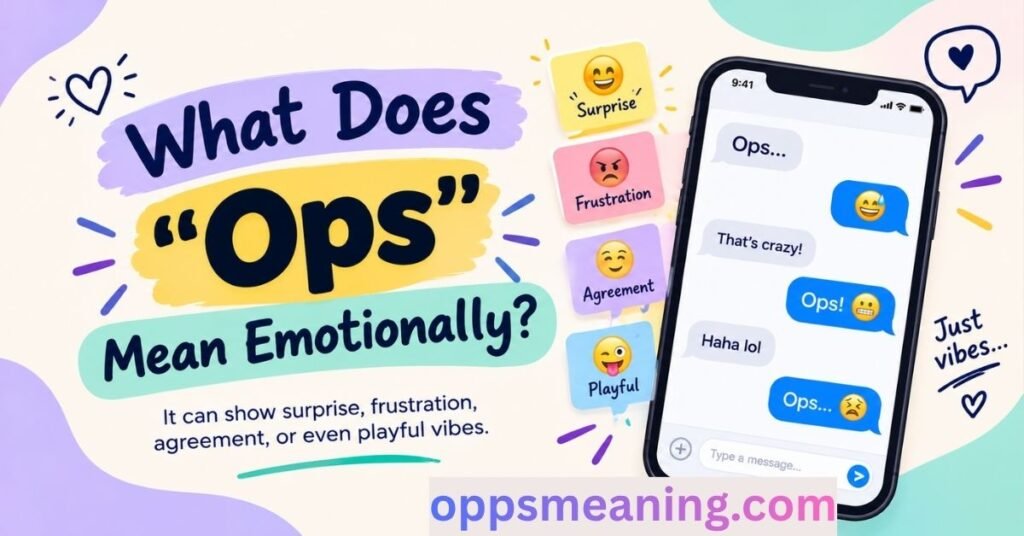
The emotional weight behind “ops” changes a lot depending on the relationship between the people talking. Sometimes it’s heavy. Sometimes it’s a total joke.
Here’s a breakdown of the different emotional tones the word can carry.
Serious Rivalry
When real conflict exists, “ops” reflects genuine rivalry or tension between people or groups.
Read More About: 300+ Baddie Snapchat Usernames (Cute & Aesthetic)
Friendly Competition
Among friends or teammates, it often reflects harmless competition, nothing more than playful trash talk.
Betrayal or Conflict
Sometimes the word points to betrayal, especially when someone close turns into part of the opposing side.
Meaning of Ops in Text Gaming Competition
In matches, it’s competitive but rarely personal. It’s just part of describing the opposing team.
Professional Neutrality
In business, there’s zero emotion attached. It reflects pure professional neutrality and nothing else.
Common Variations of Ops
The word branches out into several related phrases. Each one adds a slightly different shade of meaning, so it helps to know them individually.
| Variation | Meaning |
| Ops | General slang or business shorthand |
| Opps | Alternate spelling of the same slang meaning |
| The Ops | Refers to a specific known rival group |
| My Ops | Someone’s personal enemies or rivals |
| Real Ops | Genuine threats, not exaggerated ones |
| Fake Ops | People performing rivalry for online attention |
| Ops Team | A business unit that runs daily operations |
| Sales Ops | The team supporting sales processes |
| IT Ops | The team managing technology systems |
Ops
The most basic form, used across slang and business.
Opps
Same meaning as “ops,” just written differently.
The Ops
Points to a specific, known group of rivals.
My Ops
A personal version, describing someone’s own enemies.
Real Ops
Used to separate genuine conflict from exaggerated drama.
Fake Ops
Describes people who act tough online without real beef.
Ops Team
A core part of business operations, handling daily workflow.
Sales Ops
Focused specifically on supporting the sales process.
IT Ops
Focused on keeping technology systems running.
When Does Ops Mean Operations Instead of Slang?
Knowing when to expect the professional meaning saves a lot of confusion. A few quick context clues make this easy.
Here’s a simple table to help you decide fast.
| Setting | Likely Meaning |
| Workplace email or meeting | Operations |
| IT ticket or tech discussion | Operations |
| Gaming match or chat | Slang, sometimes operations |
| Text with friends or on social media | Almost always slang |
Workplace Context
In workplace communication, “ops” almost always means operations.
Technology Context
In technology operations, it refers to systems, servers, and support teams.
Gaming Context
Mixed, but usually still slang for opposing players.
Read More About: 98+YH Meaning in Chat: Ultimate Guide to Meaning, Uses & Examples
Personal or Social Context
Nearly always slang here, tied to rivals or friendly banter.
Common Misunderstandings About Ops
A few myths about this word keep spreading. Clearing them up makes the whole topic much easier to understand.
Let’s tackle the biggest ones directly.
“Ops Always Means Enemies”
Not true. In professional context, it simply means operations.
“Ops and Opps Are Completely Different”
Not true. They’re just an abbreviation and its alternate spelling.
“Ops Is Always Serious”
Not true. Plenty of use is playful, especially online.
“Ops Means Operations Everywhere”
Not true. Casual online language flips the meaning completely.
“Ops Is the Same as Opp”
Close, but not quite. One’s usually singular, and the other refers to a group.
How to Respond When Someone Says “Ops”
Matching your reply to the situation matters more than overthinking the word itself. Read the tone first, then respond.
Below are a few reply styles depending on the setting.
Casual Replies
“Who’s beefing now?” or “What happened?” work well for light situations.
Funny Replies
“Ops are pressed today 😂” fits playful, joking exchanges.
Professional Replies
“I’ll loop in the ops team” fits professional communication perfectly.
What to Say When You’re Unsure
Just ask. “Wait, what do you mean by that?” clears things up fast, without guessing wrong.
Regional and Generational Usage of Ops
Usage shifts depending on where you are and who’s talking. Like most internet slang, it doesn’t mean the exact same thing everywhere.
Here’s how it plays out across different groups.
Ops in the United States
Strong ties to hip-hop culture and gaming culture, especially among younger users.
Ops in the United Kingdom
UK drill music carries its own version, with a similar but distinct flavor.
Ops in Global Online Communities
Gaming and social platforms spread the word far beyond its original scenes.
Gen Z vs Millennials
Gen Z tends to use it more often and more playfully. Millennials use it too, but usually less frequently.
Is “Ops” a Bad Word or Safe for Kids?
The word itself isn’t offensive. It’s slang, not profanity, and it won’t get flagged by most content filters. Still, context matters. Conversations using “ops” can sometimes involve real conflict, threats, or bullying, so parents should pay attention to the surrounding message rather than the word alone. On its own, though, “ops” is safe. It shows up constantly in digital communication among kids and teens, most often in totally harmless, joking ways.
FAQ,s
What does ops mean in text?
It usually means opponents or rivals, though it can also mean operations in a work setting.
What does ops mean in slang?
It refers to enemies or opposing sides, often used in gaming, music, and casual conversations.
Does ops mean opponents?
Yes, in most online slang terminology, ops means opponents or rivals.
Does ops mean operations?
Yes, in business operations and tech settings, ops is short for operations.
What is the difference between ops and opps?
Almost none. It’s just a slang spelling difference, not a difference between ops and opps in actual meaning.
What does “the ops” mean?
It refers to a specific, known group of rivals or enemies.
Is ops a bad word?
No. It’s casual slang, not profanity, though the surrounding message can sometimes turn serious.
conclusion
So, what does ops mean in slang versus ops meaning operations? It really comes down to context every single time. A text from a friend usually means rivals. A message from your boss almost always means the operations department. Once you learn to read the setting, the confusion disappears fast.
Whether you run into it in gaming chat, a TikTok comment, or a WhatsApp conversation, you now know exactly what to look for. Context is still king here. Read the room, check who’s talking, and you’ll never misread “ops” again.

Ethan Brooks is a language writer who shares simple explanations of word meanings, grammar, phrases, slang, and everyday expressions. His goal is to make confusing language easy to understand with clear and helpful information.