94+BrassSmile.com Review: Dental Care Guide, Features & Safety
A bright smile starts with a healthy mouth. BrassSmile and BrassSmile.com sit at the crossroads of dental education and smile care. This dental care guide covers oral health tips, treatment choices, and a plain look at the website itself. Every fact about the site comes from its own public pages as they stood in October 2026.
What Is BrassSmile.com ?
Ever typed a brand name into a search bar and wondered what stood behind it? What is BrassSmile is a fair question. The name points to a dental education brand built around healthy teeth, smile improvement, and modern care. Its homepage describes the brand as a dental-focused platform that explains concerns, treatments, preventive steps, and questions to ask before a procedure.
The site’s seven menu categories give a quick map of its content. They are Braces, Oral Health, Dental Treatment, Dental Tips, Cosmetic Dentistry, General, and Education. Posts carry the byline of an author named Rebel Lisa. Recent titles cover dental crowns and dental insurance. The BrassSmile dental care guide below follows the same themes and adds context the site leaves out.
What Is BrassSmile.com and What Does It Offer?
BrassSmile website information shows a WordPress blog launched in July 2026 with articles on preventive dentistry, cosmetic dentistry, braces, implants, and gum health. The public pages include About Us, Contact Us, a Disclaimer, and a Privacy Policy. The homepage lists no booking tool and no treatment prices. Whether the site sells products is less clear, and a later section explains why
Why Oral Health Matters for a Healthy Smile
Think of your teeth as the foundation of a house. Cracks below the surface weaken everything above. The World Health Organization treats oral disease as a huge global health burden that affects billions of people. Pain, decay, and missing teeth can change how you eat and speak. They can also change how well you sleep and how freely you smile. Strong oral health awareness protects comfort as much as looks.
Good habits also protect your wallet. Early care costs far less than repair after damage. The American Dental Association’s MouthHealthy site links oral health to overall health and stresses early diagnosis. Long-term oral health grows from small daily actions that add up over decades. Your dentist can adjust the plan for your age, medicines, and risk level.
Essential Daily Oral Hygiene Habits
Small habits beat big rescues. Daily oral hygiene habits form the base of any good oral hygiene routine. Brush twice a day with fluoride toothpaste. Clean between your teeth once a day. Limit sugary snacks and drinks between meals. Drink water often. These steps take about five minutes a day and shield your enamel from constant attack.
A routine only works when you can keep it going. Link brushing to something you already do, such as morning coffee or evening TV. Keep floss where you can see it. Swap your toothbrush every three to four months or sooner when the bristles fray. Strong dental hygiene feels boring on purpose. Boring habits protect healthy smile maintenance better than any fancy gadget.
How to Brush and Floss Properly
Proper brushing and flossing techniques matter more than force. Tilt a soft brush about 45 degrees toward the gumline and use short, gentle strokes for two full minutes. Cover the outer, inner, and chewing surfaces of every tooth. Slide floss or an interdental brush between teeth and curve it around each tooth in a C shape. Skip the hard scrubbing because it can wear enamel and push gums back. Good plaque removal depends on thorough cleaning and not on pressure.
Understanding Plaque, Cavities, and Tooth Decay
Plaque is a sticky film of bacteria that coats teeth all day. Causes of tooth decay start here. When you eat sugar or starch, the bacteria make acid. The acid pulls minerals out of enamel and forms small holes called cavities. Plaque that stays too long hardens into tartar, so plaque and tartar buildup needs a dental cleaning to remove. How to prevent cavities comes down to fluoride, cleaning, fewer sugar hits, and regular checkups. Early decay often causes no pain, which makes cavity prevention a habit and not a reaction.
Preventing Bad Breath and Tooth Sensitivity
Bad breath usually comes from bacteria on the tongue and between the teeth. Brush your tongue gently and clean between your teeth daily. Drink water to fight dry mouth. Persistent bad breath can point to gum disease or another health issue. Managing tooth sensitivity starts with a soft brush and toothpaste made for sensitive teeth. It also helps to cut back on acidic drinks and to avoid hard scrubbing. A sharp, lasting twinge deserves a professional dental consultation because it may signal decay or a cracked tooth.
Preventive Dentistry and Regular Dental Checkups
Prevention is the cheapest dentistry there is. Preventive dental checkups let a professional check your teeth and gums. They also check your bite and old fillings. Professional dental cleaning removes deposits that brushing misses. Dentists may add fluoride, sealants, or X-rays when your risk calls for them. The benefits of preventive dentistry include fewer emergencies and lower lifetime costs. You also keep more of your natural teeth.
Visit timing differs from person to person. Some people need a checkup every six months. Others do well with longer gaps. People with gum disease or high decay risk may need visits more often. Ask your dentist for a personal schedule. This is the core idea behind personalized dental treatment planning.
| Preventive service | Main purpose | Who benefits most |
| Exam and X-rays | Find problems early | Everyone |
| Professional cleaning | Remove plaque and tartar | Everyone |
| Fluoride treatment | Strengthen enamel | Children and high-risk adults |
| Dental sealants | Cover deep grooves | Children and teens |
| Periodontal care | Control gum disease | Adults with gum problems |
Cosmetic Dentistry: Improving Your Smile
Cosmetic dentistry changes how a smile looks. It adjusts color, shape, size, and balance. Common cosmetic dentistry procedures include whitening, bonding, veneers, and full smile makeover options. A dentist should treat decay and gum disease before any cosmetic step. Healthy ground gives the best results. Think of it as repairing a roof before painting the walls.
Set realistic goals before you start. Ask what the treatment can and cannot do. Ask how long it lasts and what it costs over ten years. A good dentist will also tell you when a simpler option works. Cosmetic work should never damage healthy tooth structure. A dentist who explains limits earns more trust than one who promises miracles.
Professional Teeth Whitening vs. At-Home Products
Wondering if your brighter and whiter teeth are safe to chase? Professional teeth whitening uses dentist-controlled gels and custom trays or in-office treatment. Teeth whitening products from stores use weaker formulas and fit less precisely. The NHS advises that whitening done through a dentist is the safest route. Professional teeth whitening safety depends on a prior exam. Whitening does not change crowns, veneers, or fillings. Safe teeth whitening methods also avoid viral social media tricks that can harm enamel.
| Feature | Dentist whitening | Store-bought products |
| Safety control | High because a dentist screens you | Lower because you self-manage |
| Speed | Fast | Slower |
| Cost | Higher | Lower |
| Gum protection | Custom fit | Generic fit |
| Best for | Deep stains and sensitive cases | Mild stains |
Dental Veneers, Bonding, and Smile Design
Dental veneers and bonding fix chips, gaps, and uneven shapes in different ways. Bonding uses tooth-colored resin and often needs little or no enamel removal. Dental veneers are thin shells that cover the front of teeth. Porcelain looks natural and resists stains. Composite costs less and is easier to repair. Smile design blends face shape, tooth size, gum line, and color into one plan. Digital previews help you see the goal. Well-made natural-looking dental veneers match neighboring teeth and last for years with good care.
Braces and Clear Aligners: Benefits and Differences
Straight teeth do more than look good. They are easier to clean and wear evenly. Orthodontic treatment options include metal braces, ceramic braces, and clear aligners. Each one acts as a teeth alignment solution with its own strengths. A professional bite exam decides what suits you. Retainers afterward protect the new position.
Braces vs clear aligners is a common debate. Braces stay fixed and give strong control in complex cases. Aligners are removable and nearly invisible but need about 20 to 22 hours of wear a day. Skipped wear slows progress. Either way you must clean your teeth well during treatment because plaque collects easily.
| Factor | Braces | Clear aligners |
| Visibility | Visible | Nearly invisible |
| Removable | No | Yes |
| Complex cases | Often better | Sometimes limited |
| Eating rules | Avoid sticky foods | Remove for meals |
| Discipline needed | Low | High |
Restorative Dental Treatments for Damaged Teeth
Restorative dentistry rebuilds teeth hurt by decay, cracks, wear, or infection. Restorative dental procedures include fillings, root canals, bridges, dentures, crowns, and implants. The goal is to save as much natural tooth as possible. Tooth decay treatment depends on how deep the damage runs. A small cavity needs a filling. A large one may need a crown. An infected nerve may need a root canal.
Early action keeps repairs small. A tiny cavity found at a checkup takes minutes to fix. The same cavity ignored for a year can cost a tooth. Report pain, sensitivity, cracks, or loose fillings quickly. These dental treatment options work best on teeth caught early.
Dental Crowns and Tooth Repair
Dental crowns for damaged teeth act like a protective cap that restores shape and strength. Dental crowns suit cracked, heavily filled, or root canal teeth. They also cover implants. Materials include porcelain, ceramic, metal, and zirconia. Porcelain looks natural while metal handles heavy chewing well. Most crowns last roughly 10 to 15 years with good care. The exact figure varies by material and habits.
Dental Implants and Missing Teeth
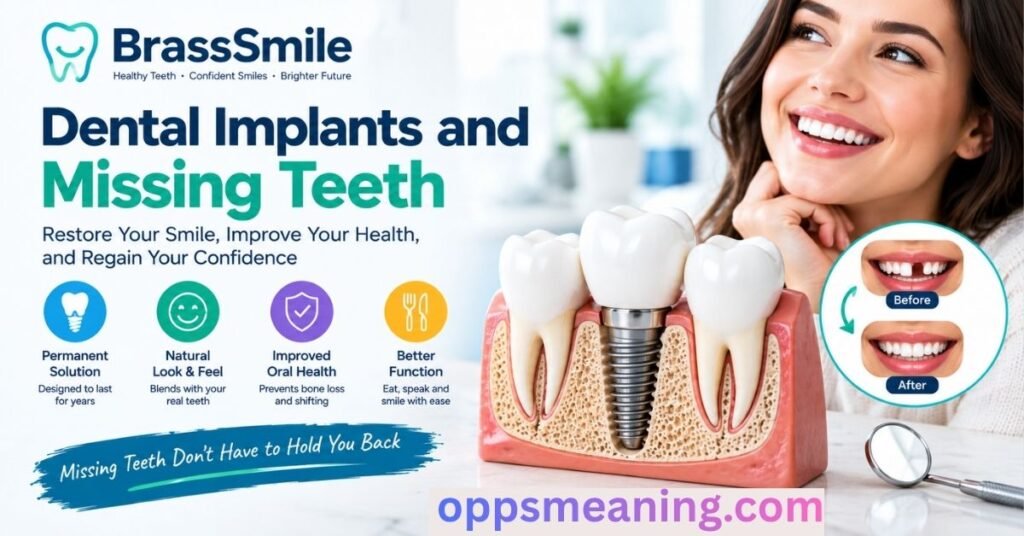
A gap in your smile can affect chewing, speech, and confidence. Dental implants for missing teeth work as artificial roots placed in the jawbone. A crown, bridge, or denture then attaches to them. Replacement options for missing teeth also include bridges and removable dentures. Your dentist checks bone, gum health, medical history, and smoking habits before recommending dental implants.
Implants cannot decay but the tissue around them can still get sick. The infection is called peri-implantitis and it can damage the supporting bone. Daily cleaning and regular visits protect the investment. Dental implant recovery usually brings mild swelling in the first days. The bone then bonds with the implant over several months. Follow your surgeon’s aftercare plan closely.
All-on-X Dental Implants: Benefits and Considerations
All-on-X dental implants replace a full arch of teeth with a fixed bridge on a few implants. “All-on-4” is a trademarked name from one manufacturer. All-on-X is the general idea. Benefits include fewer implants and often faster results than single implants. Considerations include cost and the need for enough bone. Cleaning under the bridge takes extra effort. Ask for a full professional dental consultation and a written plan before you agree.
Gum Health and Modern Dental Technology
Healthy gums frame your teeth and hold them in place. Bleeding, swelling, bad breath, and gum recession are warning signs. Gum disease prevention begins with daily cleaning and regular visits. Early gum disease (gingivitis) can reverse. Advanced disease (periodontitis) cannot. The NHS gum disease page explains the stages clearly.
Modern dental technology now includes digital X-rays, intraoral cameras, 3D scans, and treatment simulations. These tools show problems clearly and make planning easier. Modern dental treatment technology still depends on a skilled dentist. A shiny machine does not replace a careful exam. Good clinics use technology to improve safety and communication.
How to maintain healthy gums comes down to a few steps. Brush gently along the gumline. Clean between your teeth daily. Quit smoking and see a dentist if bleeding lasts more than a week or two.
Read More About: 67+Growth Navigate Funding: Startup Tools, Funding Options, and Growth Strategies
Choosing the Right Dental Treatment
The best treatment for your neighbor may not suit you. Weigh your health, goals, budget, time, and maintenance needs. Choosing the right dentist matters as much as choosing the procedure. Look for a licensed professional who listens and explains. Check credentials with your national or regional dental board. A good dentist welcomes questions and never pressures you.
Use the table below as a script at your next visit. Dental treatment costs and durability vary by country and material. The typical lifespans listed are rough ranges and not promises. Seek a second opinion when treatment is costly or permanent.
| Question to ask | Why it matters |
| Why do I need this? | Confirms the diagnosis |
| Are there simpler options? | Avoids extra work |
| What are the risks? | Supports informed consent |
| How long will it last? | Sets expectations |
| What will it cost in total? | Prevents surprises |
| Treatment | Typical lifespan (varies) | Cost level |
| Filling | 5 to 15 years | Low |
| Composite bonding | 5 to 10 years | Low to medium |
| Dental crown | 10 to 15 years | Medium |
| Porcelain veneer | 10 to 15 years | High |
| Dental implant | Decades with care | High |
| Professional whitening | Months to a few years | Medium |
Nutrition and Its Role in Healthy Teeth
What you eat feeds your teeth or your cavity bacteria. Nutrition for healthy teeth begins with limiting how often you eat sugar. Constant sipping and snacking keep acid levels high. Calcium, vitamin D, and phosphorus build strong enamel and bone. Water rinses food away and supports saliva. Saliva is your mouth’s natural defense.
Enamel protection also means watching acidic drinks such as soda, sports drinks, and citrus juice. Drink them with meals and not over hours. Rinse with water afterward and wait before brushing. The table below shows simple swaps.
| Tooth-friendly choices | Tooth-risky choices |
| Water | Soda and energy drinks |
| Cheese and plain yogurt | Sticky candy |
| Crunchy vegetables | Frequent sugary snacks |
| Nuts | Sweetened coffee all day |
Common Dental Care Mistakes to Avoid
Even careful people slip up. The most common error is brushing too hard. Another is skipping floss because it feels tedious. Some people rinse with water after brushing and wash away the fluoride. Others try do-it-yourself whitening from social media. Ignoring small pain is just as risky. Each mistake chips away at long-term oral health.
Fixing these habits costs nothing. The table below pairs each mistake with a simple fix. Online dental information safety also matters here. Treat viral tips with caution and check them against trusted sources.
| Mistake | Better habit |
| Scrubbing hard | Use gentle strokes with a soft brush |
| Skipping floss | Clean between teeth daily |
| DIY whitening trends | See a dentist first |
| Ignoring pain | Book an exam early |
| Using teeth as tools | Use scissors or openers |
| Skipping checkups | Keep regular visits |
How to Maintain a Healthy Smile as You Age
Your mouth changes with time. Dry mouth becomes common because many medicines reduce saliva. Roots can become exposed as gums recede and root decay follows. Gum disease risk rises. Dentures and bridges need special cleaning. Healthy smile maintenance at any age needs a routine that adapts to these shifts.
Practical steps help. Use fluoride toothpaste and ask about stronger fluoride products. Sip water through the day. Clean dentures daily and remove them at night. Keep regular checkups even when you have few natural teeth. A dentist can also screen for oral cancer and other problems. Good care at 70 pays off in comfort and confidence.
Is BrassSmile.com Legit and Safe to Use?
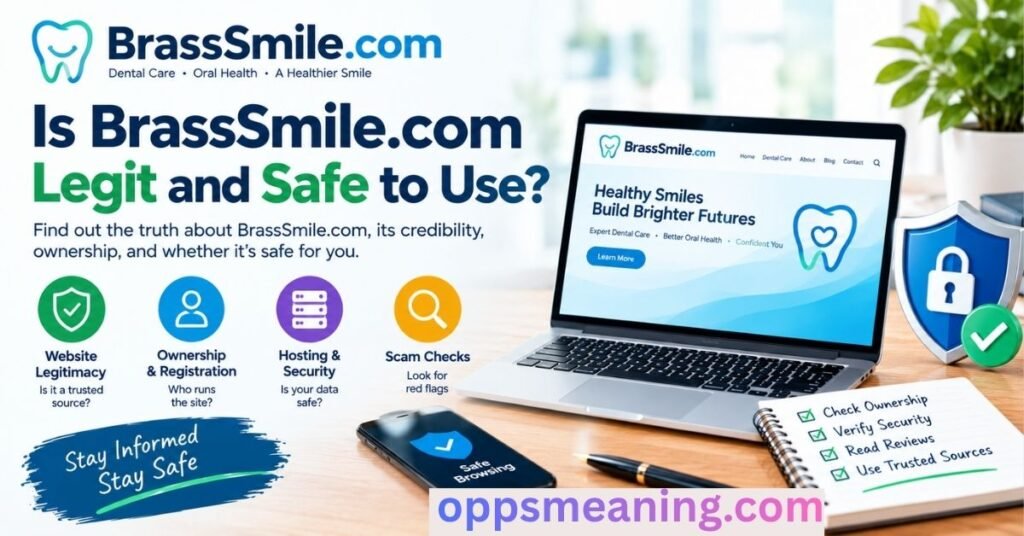
BrassSmile.com legitimacy depends on what you expect from it. As a reading site, it looks like a normal small WordPress blog with dental articles, standard policy pages, and a clear medical disclaimer. As a clinic or store, the evidence is thin and conflicting. BrassSmile.com website safety for casual reading looks reasonable. Sharing health records, payment data, or personal details is a different matter. The site itself warns against sending private medical records through its contact form.
Here is the honest summary of what the public pages show. The About Us page calls the brand a teeth-whitening and oral care company that sells at-home kits. The Contact page mentions whitening kits, orders, and customer support. The Privacy Policy says the site does not sell dental products or process online orders. These statements clash. Until the owner clears this up, treat any purchase with caution. Strong dental website credibility needs consistent claims.
| Site page | What it says |
| Homepage | Dental education and smile improvement content |
| About Us | At-home whitening and oral care brand |
| Contact Us | Customer support by email for products and orders |
| Privacy Policy | Informational site with no product sales or orders |
| Disclaimer | Educational only with no emergency or treatment services |
What Is the Purpose of BrassSmile.com?
The homepage and Disclaimer present the site as an educational resource on dental care, hygiene, whitening, and treatments. It aims to help readers prepare for a dental visit. The About Us and Contact pages hint at a commercial side that the Privacy Policy denies. The clearest purpose is general trustworthy dental education resources-style reading, though the site’s own pages do not fully agree.
Is BrassSmile.com a Licensed Dental Clinic?
No public page claims clinic status or lists a dentist’s license. The Disclaimer states that using the site creates no dentist-patient relationship. It also says the site offers no emergency services and does not examine visitors or diagnose conditions. The Disclaimer adds a strong warning: “Never delay professional dental care because of information you have read on this website.” Treat the site as reading material and never as a dental clinic guide to a real practice. To verify any dentist, check the national or regional dental board register.
Read More About: 55+ Fentomagazine.com: A Complete Guide to This Amazing Digital Magazine and Lifestyle Platform
Website Ownership, Registration, and Security
BrassSmile.com ownership information is limited. The pages name no company or street address. Posts carry the author name Rebel Lisa. The only contact is an email address on a free mail service. Domain registration data such as registrar, creation date, and owner could not be confirmed at the time of review because the lookup was blocked. Readers can check it themselves through the ICANN Lookup tool. Many registrants hide personal details behind privacy services, which is normal. Also confirm that the address bar shows HTTPS.
BrassSmile.com vs. BrassSmile.net: Are They Different?
BrassSmile.com vs BrassSmile.net could not be settled. The .net address was not checked, so no link between the two can be claimed. Treat them as separate until proven otherwise. A .net with the same name might belong to anyone. Always confirm the exact spelling and domain ending before you trust a site or share any data.
How to Identify Similar or Copycat Domains
Many sites use near-identical names with different spellings or endings. Searches for similar spellings of the name return unrelated sites with conflicting descriptions. Some present themselves as clinics. Others describe braces guides or at-home products. That confusion is a warning sign. Compare the details in the table below before you trust any look-alike address.
| Red flag | What to check |
| Slightly different spelling | Read the address letter by letter |
| Different ending (.net, .info) | Confirm the owner through a lookup |
| No clear contact details | Look for a physical address and phone |
| Pressure to buy or book now | Walk away and verify |
| Bold promises like “overnight” results | Compare with dental association advice |
| No named dentist or license | Check the dental board register |
Benefits and Limitations of BrassSmile.com
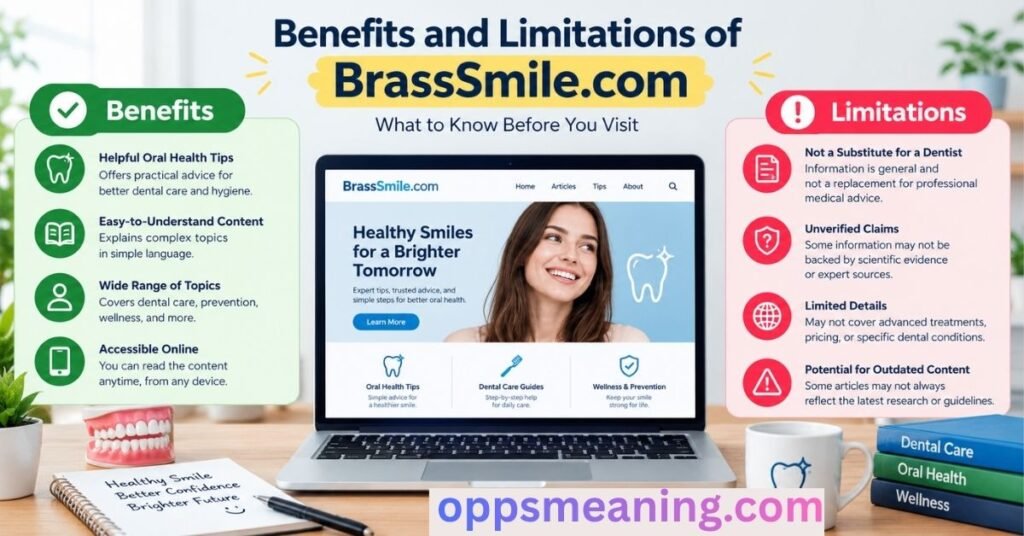
The site offers clear, readable articles in plain language. Topics span oral health tips, treatments, and common questions. The medical disclaimer is honest and strong. It also points readers to qualified professionals. These strengths make it a handy starting point for learning. This BrassSmile.com review rates it as helpful for basic reading.
The limits matter just as much. The site cannot diagnose or treat. It lists no named dental expert and gives no clinic details. Its pages disagree about whether it sells products. Costs and guidelines on any blog can go out of date quickly. Verify key facts with an official body before acting.
| Benefits | Limitations |
| Easy-to-read dental topics | No diagnosis or treatment |
| Clear medical disclaimer | Owner details not clearly listed |
| Covers braces to implants | Pages disagree about selling products |
| Encourages professional care | Facts may age without updates |
Reliable Alternatives for Dental Information
Cross-check any dental article against a major health body. These reliable dental information websites publish evidence-based guidance for free. Use them alongside any blog to confirm facts and spot weak advice. They also help patients worldwide find consistent standards.
Read More About: WiseStudySpot.com Explained: Features, Topics, Safety, and Complete User Guide (2026)
Each source has a strength. The ADA’s MouthHealthy site gives patient-friendly tips. The NHS explains conditions and treatments clearly. The WHO covers the global picture. The CDC shares prevention data. The FDI links dental groups around the world. Together they offer a strong base for oral health awareness.
| Source | Best for |
| ADA MouthHealthy | Everyday patient advice |
| NHS Healthy Teeth and Gums | Clear condition guides |
| WHO Oral Health | Global facts |
| CDC Oral Health | Prevention and statistics |
| FDI World Dental Federation | International dental standards |
Can BrassSmile.com Replace a Professional Dental Visit?
No website can. A dentist looks inside your mouth and takes X-rays. They test your bite and read your history. A blog sees none of that. Reading helps you learn terms and plan questions. It does not replace a diagnosis. The site’s own Disclaimer says the same.
Use online reading wisely. Prepare your questions and note your symptoms. Then book a professional dental consultation. Seek urgent care for severe pain, facial swelling, uncontrolled bleeding, or injury. Never self-treat with unverified products. Your dentist can confirm what suits your teeth.
FAQ,s
What Is BrassSmile.com ?
BrassSmile.com is a dental education website at BrassSmile.com. It publishes articles on oral hygiene, whitening, braces, crowns, implants, and smile improvement. Its About Us page also describes a whitening product brand, so its exact nature is not fully clear.
What Can You Learn From BrassSmile.com?
You can learn dental basics such as brushing, treatment types, and questions to ask a dentist. The site covers braces, oral health, dental treatment, tips, cosmetic dentistry, and education. Use it as a starting point and confirm key facts with a dentist.
Is BrassSmile.com a Dental Clinic?
No public page says it is a clinic. The Disclaimer states that it provides no emergency services and does not create a dentist-patient relationship. It lists no licensed dentist. Use it for reading and see a real practice for care.
Does BrassSmile.com Sell Whitening Kits or Clear Aligners?
The answer is unclear. The About Us and Contact pages mention whitening kits and orders. The Privacy Policy says the site does not sell dental products or process online orders. No page offers clear aligners. Do not buy anything until the owner resolves this and the seller is verified.
Is Professional Teeth Whitening Safe?
Whitening supervised by a dentist is generally the safer route. A dentist checks for decay and gum problems first. Some people feel temporary sensitivity. Whitening does not change crowns, veneers, or fillings.
How Often Should You Visit a Dentist?
Many people go about every six months. Your ideal schedule depends on your risk of decay and gum disease. People with gum problems may need more frequent visits. Ask your dentist for a personal plan.
What Causes Bleeding Gums?
Causes of bleeding gums most often include plaque buildup and early gum disease. Brushing too hard can also cause it. Other triggers include pregnancy, certain medicines, vitamin shortages, and some health conditions. Bleeding that lasts more than a week or two needs a dental exam.
How Long Do Common Dental Treatments Last?
Lifespans vary with materials, habits, and care. Fillings often last 5 to 15 years. Crowns and veneers commonly last 10 to 15 years. Implants can last decades. No honest clinic promises that any treatment lasts forever.
Can BrassSmile.com Help You Choose Cosmetic Dental Treatments?
It can help you learn the options and prepare questions. It cannot judge what suits your teeth. A dentist must examine your mouth and plan your care. Use the site to get ready and not to decide.
Conclusion
Healthy teeth come from small daily habits and smart professional care. Brush with fluoride twice a day. Clean between your teeth and eat with care. Keep regular preventive dental checkups. Pick treatments only after a clear diagnosis and an honest talk about risks, cost, and lifespan. Strong smile improvement always rests on a healthy base.
As for the website, BrassSmile.com works as a basic reading resource with a sensible disclaimer. Its pages disagree about selling products and its owner details are thin. Treat it with care and confirm important facts with trusted sources. Then book your next dental visit and take the first step toward a healthier, more confident smile.

Ethan Brooks is a language writer who shares simple explanations of word meanings, grammar, phrases, slang, and everyday expressions. His goal is to make confusing language easy to understand with clear and helpful information.