BD268XZ Explained: Ultimate Guide to Meaning, Uses, Benefits, and Future

Picture a warehouse where every box wears the same plain label. Nobody could find anything inside it for long. BD268XZ fixes that kind of mess. It works as a digital identifier that gives each record, request or device a name of its own. Anyone who wants a clear BD268XZ technology guide should start with that simple job. Strong labels hold up BD268XZ digital systems from the smallest app to the largest cloud. The sections below cover the BD268XZ meaning, BD268XZ uses, BD268XZ benefits and BD268XZ future. They also show where the idea falls short.
What Is BD268XZ? Meaning and Purpose
Every big idea starts with a plain definition. The BD268XZ definition is easy to grasp. BD268XZ is an alphanumeric code that names one item inside a system. That item can be a record, a session, a payment or a sensor. The BD268XZ meaning lies in its job rather than its letters. It acts as a unique identification code that no other item shares. Think of a passport number as a close cousin. Public standards for BD268XZ do not exist yet. It makes sense to treat it as a flexible identifier pattern.
Why do systems need such labels? The BD268XZ purpose is accuracy. A label lets software find one item among millions in a blink. It also stops two items from getting mixed up. The sample code itself shows a clear BD268XZ structure: two letters, three digits and two more letters. That pattern gives about 457 million combinations. Builders can stretch it by adding length or mixing characters. The meaning and purpose of BD268XZ therefore comes down to one promise: one label for one item with no confusion.
| What it can name | Example | Why the label helps |
| Database record | One customer order | Quick lookup |
| User session | One login visit | Clear activity trail |
| Transaction | One card payment | Easy audits |
| IoT device | One smart meter | Remote management |
| API request | One app call | Faster debugging |
Why Is BD268XZ Important in Modern Technology?
Data now grows faster than any team can read it. A single online shop may log millions of events each day. Plain counters such as 1, 2 and 3 work fine at first. Trouble starts when many servers write data at once. Two servers can hand out the same number. The role of BD268XZ in digital systems is to prevent that clash. A well-built digital identifier keeps order across huge data management systems. Standards such as UUID in RFC 9562 show how seriously engineers treat this problem.
Security adds a second strong reason. Guessable numbers invite snooping. If your invoice is number 1001, a curious visitor may try 1002. Hard-to-guess labels shut that door a bit. They do not replace login checks though. The OWASP guide on insecure direct object references makes this point clearly. Add distributed systems to the mix and the need grows. Many machines must agree on names without chatting constantly. Strong unique identifiers in modern technology make that agreement possible.
| Feature | Plain counter | Structured identifier like BD268XZ |
| Guessability | Very easy | Harder (depends on randomness) |
| Use across many servers | Risk of clashes | Safe with the right design |
| Storage size | Small | Larger |
| Natural time order | Automatic | Depends on the design |
Key Applications of BD268XZ in Digital Systems
Labels earn their keep in the real world. The BD268XZ applications below touch almost every layer of a tech stack. Some labels sit deep inside storage. Others sit at the edge near the user. The practical applications of BD268XZ share one pattern. Each one needs to name a thing once and find it later. That need appears in shops, banks, hospitals and games alike. Seeing the range helps you judge where the idea fits your own work.
Each use case also teaches a lesson. Databases care most about speed while APIs care about traceability. Security tools care about secrecy and control. Cloud platforms care about scale and cost. AI projects care about repeatable results. The BD268XZ uses differ in detail but agree in spirit. A single naming habit can serve all of them. Five short tours of real use cases come next.
| Area | Main job of the label | Key payoff |
| Databases | Mark each record | Fast and clean lookups |
| APIs and backends | Trace each request | Quick bug fixes |
| Cybersecurity | Tag sessions and logs | Clear audit trails |
| Cloud | Name each resource | Cost and fault tracking |
| AI | Version data and models | Repeatable experiments |
BD268XZ in Database Management
Databases live and die by clean keys. In database management, a code like BD268XZ marks each row as one of a kind. Picture an online store that ships ten million orders a year. Each order gets its own label at checkout. Support staff type that label and see the full story at once. Good database indexing makes the search nearly instant. A unique key also blocks accidental copies. That protects data integrity during busy sales seasons. Such habits sit at the heart of BD268XZ in database management systems. They keep reports honest and customers happy.
BD268XZ in APIs and Backend Systems
Every tap on an app sparks a chain of hidden calls. A request label lets developers follow that chain from start to end. With solid API integration, the same code travels across many services. The W3C Trace Context standard shows how this idea works at scale. In backend development, such backend system identifiers turn a messy log into a readable story. Engineers spot slow steps fast. They also fix bugs in minutes instead of hours. Better still, the label costs almost nothing to attach. That tiny cost buys a huge gain in clarity for every team member.
BD268XZ in Cybersecurity Systems
Attackers love confusion because it hides their tracks. Clear labels take that cover away. In cybersecurity systems, a code like BD268XZ can tag each session and each access log. Analysts then trace one suspicious visit from login to logout. The OWASP Session Management Cheat Sheet asks for long and truly random session values. A seven-character code holds only about 36 bits of randomness at best. That is too weak for session secrets. Use it for log tracing instead. Treat BD268XZ in cybersecurity applications as a helper for digital security rather than a lock.
Read More About: 20xBusiness.com Review 2026: Powerful Features, Benefits & Credibility
BD268XZ in Cloud Computing
Clouds run on thousands of invisible machines. Each machine, disk and network call needs a name. Cloud computing technology handles this with resource labels. A code such as BD268XZ can mark a virtual machine or a storage job. Operators then track costs and failures per item. Strong cloud infrastructure relies on this habit daily. Billing teams use the labels to split costs between departments. Engineers use them to delete old test servers safely. These habits show BD268XZ in cloud computing platforms at work. Without labels, a cloud account turns into a junk drawer that nobody dares to clean.
BD268XZ in Artificial Intelligence
Machine learning projects breed files at a frightening pace. Datasets, models and test runs pile up fast. Artificial intelligence systems need labels to keep that pile tidy. Tools such as MLflow Tracking give every run its own identifier. A BD268XZ-style code can tag datasets and model versions the same way. Teams then repeat an experiment exactly. They also explain a model’s results to auditors. Without labels you may never learn which data trained which model. That gap can sink a project during a review or a legal check.
How Does BD268XZ Work? A Step-by-Step Guide

Curious how the machinery runs? The BD268XZ working process has five clear stages. Each stage hands its result to the next one. The BD268XZ explained in this flow is simple enough to sketch on a napkin. First comes the shape of the code. Creation, assignment, storage and watching follow in turn. Skipping a step weakens the whole chain. Treat the stages as links in one strong rope.
Think of a busy public library for a moment. Librarians pick a labeling rule first. They stamp each new book next. They shelve it and update the catalog. Later they check the shelves for strays. Learning how BD268XZ works feels much like running that library. The BD268XZ technical structure matters most at the start. Everything after it depends on that early choice.
| Step | Action | Output |
| 1. Define | Choose length, characters and pattern | A format rule |
| 2. Generate | Use random, hash or rule-based methods | A new code |
| 3. Assign | Attach the code to an entity | A labeled item |
| 4. Store | Save with an index and a uniqueness rule | A searchable record |
| 5. Track | Log, monitor and audit | An activity trail |
Defining the Structure and Format
Rules always come before the codes themselves. Designers first decide the length and the allowed characters. They also pick a pattern such as two letters then three digits then two letters. That pattern fixes the BD268XZ technical structure. Size matters a great deal at this stage. Seven characters drawn from letters and digits give about 78 billion codes. The strict letter-digit-letter pattern gives only 457 million. Add a check digit if humans will type the code by hand. The Luhn method is a famous example. A good BD268XZ structure saves pain later.
Generating a Unique Identifier
Creation is where the magic and the danger meet. Unique identifier generation can use random numbers or hashes or fixed rules. Random methods spread codes evenly. Hashes turn input data into a fixed fingerprint. Yet any short code can collide. The birthday effect says that about 25,000 random picks from 457 million codes give even odds of a repeat. Builders therefore check for repeats before saving. Longer formats such as ULID pack time and randomness into 26 characters. Pick the method that fits your scale and your risk level.
Assigning BD268XZ Within a System
A fresh code means little until it finds a home. Assignment ties the label to one real thing. A shop attaches it to an order the moment payment clears. A server attaches it to a request when the call arrives. Timing matters more than most newcomers expect. Assign too late and records lose their trail. Assign twice and you create a mess. Many teams let the database assign the code inside one safe transaction. This habit keeps BD268XZ implementation tidy across busy services. It also leaves a clean record of when each item first appeared.
Read More About: 96+MethStreams Review: Safety, Legality, and Better Ways to Watch Live Sports
Storing and Managing Data
Stored labels must be easy to find again. Databases keep them in a dedicated column with a uniqueness rule. The PostgreSQL unique index documentation shows how that rule blocks duplicates. A well-chosen index turns slow scans into near-instant lookups. Careful data organization also means picking the right column type. Compact column types save a surprising amount of space. Backups and archives need the same labels so old records stay traceable. Good habits here support data management systems for many years.
Tracking and Monitoring System Activity
Labels shine brightest when something breaks. System tracking and monitoring tools read the code from every log line. Dashboards then group events by label and show the full journey. Alerts fire when one label shows odd behavior. Common data tracking and monitoring methods include log tagging and trace headers. Strong performance monitoring spots slow steps before users complain. Teams also audit the labels to find gaps. A missing code in the logs often points to a hidden bug. This final stage closes the loop that began with the first definition.
Key Benefits of Using BD268XZ
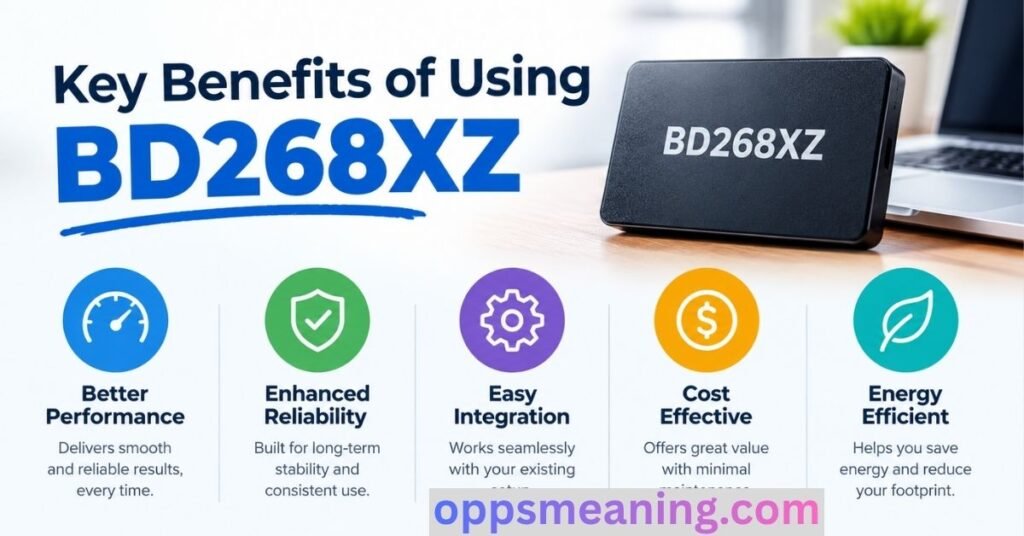
Good ideas pay off in plain ways. The BD268XZ benefits show up in speed, safety and order. Teams spend less time hunting for records. Auditors waste less time on guesswork too. Customers also see far fewer mix-ups. These gains grow with the size of the system. Small projects may barely notice the change. Large ones feel the difference every day.
A short story helps prove the point. Consider a hypothetical support desk at a small shop. Agents once searched orders by name and date. Each search took about two minutes. After the shop added unique order labels each search took seconds. This example is made up for illustration. Still, the pattern matches what many teams report after clean keys arrive. The BD268XZ benefits and limitations both deserve a fair look.
| Benefit | How it helps | Where you see it |
| Scalability | Systems grow without redesign | Cloud platforms |
| Organization | Each entity has one identity | Databases |
| Security and traceability | Harder guessing and clearer audits | Logs and reports |
| Performance | Faster lookups with indexes | Search queries |
Improved Scalability and Flexibility
Growth should feel exciting rather than scary. A well-designed code lets a system add servers and users without a redesign. System scalability improves because no central counter slows things down. Each server can create labels on its own. A flexible format also allows extra characters later. Teams can add a region prefix or a year marker. Old codes stay valid after such changes. This habit forms a core part of improving data organization and scalability. It lets a young startup grow into a large firm without rebuilding its foundation.
Better Data Organization and Management
Tidy data feels like a clean desk. Every item has one name and one place. Reports then join tables without guesswork. Merging two systems becomes far less painful. Strong data organization also helps new staff learn the system quickly. They follow the label and find the story. Fewer duplicates mean cleaner dashboards. Clean dashboards lead to better decisions. That chain explains why BD268XZ for modern businesses draws so much interest. Order at the base level lifts the quality of everything built on top.
Enhanced Security and Traceability
Trust needs a paper trail. Labeled events let teams rebuild who did what and when. Hard-to-guess codes also reduce simple enumeration attacks. Yet one limit deserves a clear warning. A label proves nothing about permission. Always check access rights on the server. Pair labels with encryption and logging for solid digital security. Traceability then supports audits and rapid incident response. Together these steps help with managing digital system integrity. They give investigators a thread to pull when trouble strikes.
Potential Performance Improvements
Speed gains are real but conditional. A unique indexed key makes lookups quick. Compact codes also cut memory use. However, fully random codes can slow inserts in some databases. New rows land in scattered spots of the index. Time-ordered formats avoid that issue. UUID version 7 and ULID both follow that idea. Test your own workload before you commit. Measured results beat guesses every time. Benchmarks on real data reveal trade-offs that theory misses.
Challenges and Limitations of BD268XZ
No tool is free of trade-offs. The technology implementation challenges around identifiers are real. Planning errors surface months later. Fixing a live key format hurts. Teams must move every table and every log and every integration. Honest planning saves both money and sleep. Four snags appear again and again.
Every limit also has a remedy. Most problems trace back to a rushed design. A short review before launch catches many of them. Test the design with realistic data volumes. Ask what happens at ten times today’s load. These habits address the technical challenges of identifier management early. Then you can build with confidence.
| Challenge | Main risk | Quick fix |
| Implementation complexity | Wrong format choice | Design review and pilot |
| Storage and indexing | Bigger indexes | Compact column types |
| Integration | Legacy schema limits | Adapter or mapping layer |
| Duplicates | Corrupted records | Uniqueness constraints |
Implementation Complexity
Simple labels hide tricky choices. Length, alphabet, ordering and generation method all interact. A wrong guess early forces painful migrations later. Teams must also decide who creates the label: the app or the database. Clear documentation helps everyone follow the same rules. A pilot project reveals surprises cheaply. Start with a small pilot and measure results. This careful approach tames BD268XZ implementation risk. It also builds trust inside the team before the big rollout begins.
Data Storage and Indexing Requirements
Longer labels cost noticeably more storage space. Every index copies the label again. With billions of rows the bill grows fast. Text columns need more bytes than numbers. Some teams store compact binary forms. Others shorten codes with smart encoding. Good database indexing also needs upkeep through rebuilds and fresh statistics. Watch disk and memory use from day one. Cheap fixes beat late emergencies. A monthly size report takes minutes and can save a costly surprise.
Read More About: TRWho.com Tech Review 2026: Best Guide to Technology, Security, Hardware & Software
Integration With Existing Systems
Old software rarely welcomes new formats. A legacy table may expect plain numbers. Other tools may cut long strings or reject letters. Adapters can translate between old and new keys. A mapping table works well during migration. Test each connected service before the switch. Plan for rollbacks too. Smooth moves protect users from outages. Patience here pays off because one broken integration can stall an entire release.
Duplicate Identifiers and Data Integrity Risks
One repeated label can wreck a ledger. Two orders may share a record or one customer may see another’s data. Duplicate identifier prevention starts with a database uniqueness rule. Next comes a retry path that creates a new code after a clash. Format size matters most. About 330,000 random picks from 78 billion codes already carry even odds of a repeat. Short formats need strict checks. Strong checks protect data integrity and customer trust. Never assume luck will keep your records apart.
Best Practices for Implementing BD268XZ

A few habits prevent most disasters. BD268XZ implementation best practices are simple to list but hard to follow. Consistency tops the chart of good habits. Planning ranks right behind it in value. Monitoring closes the loop at the end. Teams that keep these habits spend less time on emergencies. They also onboard new engineers faster. Four proven habits follow in detail.
Habits stick when you write them down. Store the rules in a short team handbook. Review them each quarter. Automate checks inside your build pipeline. Failing builds teach faster than lectures. Teams that automate rules rarely repeat old mistakes.
| Practice | What to do | Payoff |
| Consistent format | One rule for all services | Easy parsing |
| Proper indexing | Index the label column | Fast lookups |
| Duplicate checks | Uniqueness rule plus retry | Safe data |
| Monitoring | Alerts, audits and dashboards | Early warnings |
Maintaining a Consistent Format
Chaos loves inconsistent formats. If one service writes lowercase and another writes uppercase, matches fail. Pick one rule and enforce it everywhere. Use a shared library to create and validate codes. Reject bad input at the door. Document the pattern in plain language. A short regular expression often does the job. This discipline gives clean data organization from the first day. It also saves hours of cleanup when teams merge their data later.
Using Appropriate Database Indexing
An unindexed label is a needle in a haystack. Always index the column that holds it. Use a unique index so duplicates fail loudly. Choose an index type that suits your queries. Review slow-query reports each month. Drop indexes nobody uses. They cost space and slow writes. The PostgreSQL index chapter explains the options well. Small tuning steps here often bring the biggest speed gains.
Preventing Duplicate Identifiers
Prevention beats cleanup every time. Combine three layers of defense. First pick a generator with enough randomness or a coordinated sequence. Next add a uniqueness constraint in the database. Finally write a retry rule for rare clashes. Log every collision to learn how often it happens. If clashes grow, lengthen the format. This routine delivers steady duplicate identifier prevention. It also supports the larger goal of preventing duplicate identifiers across every team and service.
Monitoring System Performance and Reliability
Healthy systems still need a doctor’s visit. Track how long lookups take and how often errors appear. Set alerts for sudden spikes in failed assignments. Run audits to find orphaned labels. Regular performance monitoring keeps small issues small. Graph the growth of your label table to plan storage. Share dashboards with the whole team. Shared eyes catch more problems. Reliable systems rarely come by luck. They come from steady attention and honest numbers.
Read More About: TheTechYX.com Review 2026: Technology News, AI Features, Safety, and Website Guide
The Future of BD268XZ in Emerging Technologies
Tomorrow’s systems will juggle far more things than today’s. The BD268XZ future looks bright for that reason. More devices mean more labels. More automation means more records to trace. Standards will keep evolving as well. The future of digital identification systems will favor formats that sort by time and resist guessing. BD268XZ-style codes can ride that wave if designers choose lengths wisely.
Four trends deserve attention. Cloud systems keep spreading across regions. AI tools keep creating new data. Ledgers and sensors keep multiplying. Each trend raises the stakes for modern digital infrastructure. Smart planning now avoids rework later. Treat these emerging technology applications as a map rather than a promise.
| Trend | Identifier need | Design hint |
| Distributed cloud | Labels without a central counter | Add time and node bits |
| AI automation | Audit and replay of every task | Version data and models |
| Blockchain links | Bridge off-chain records | Store a reference code |
| IoT growth | Names for billions of devices | Use longer formats |
Cloud Computing and Distributed Systems
Distributed work needs shared naming without constant chatter. Distributed systems spread across regions cannot wait for one central counter. Each node must mint labels alone. Formats with timestamps and node bits solve this. Twitter’s Snowflake-style IDs made the approach famous. Such methods avoid clashes while keeping order roughly by time. Cloud infrastructure teams gain speed and resilience as a result. The same logic shapes cloud computing technology choices today. Expect future labels to carry more built-in structure than a plain random string.
AI-Driven Automation
Automation feeds on tidy records. Artificial intelligence systems will launch thousands of tasks each hour. Each task needs a label for audit and replay. If a model makes a bad call, someone must trace its inputs. Labels make that trace possible. Regulators in several regions already ask for logging in high-risk AI. Well-labeled pipelines help teams answer fast. Expect identifier rules to appear in AI governance checklists. Teams that adopt them early will face fewer surprises during reviews.
Potential Blockchain Applications
Chains already label their own data. A Bitcoin transaction ID is a hash of the transaction itself. Where would a code like BD268XZ fit then? It could link an off-chain record to an on-chain entry. A shipping firm might tie a parcel code to a ledger entry. That is blockchain integration at a practical level. The idea remains speculative. Use cautious wording and test carefully before any real launch. Prototypes should prove value before anyone makes bold promises.
Internet of Things (IoT) Integration
Billions of gadgets will chatter online. The Internet of Things (IoT) needs names for every sensor and switch. A seven-character code cannot cover that scale alone. Designers add prefixes for site and type. They may also use longer formats. Devices should carry a code from manufacture onward. Cloud dashboards then group them by label. Strong naming makes remote updates and repairs far easier. A repair crew can find the right meter among millions in seconds.
Why Does BD268XZ Matter for Modern Businesses?
Business leaders care about results more than bits. BD268XZ for modern businesses boils down to fewer errors and faster answers. Imagine a hypothetical online bakery. It sells ten thousand cakes a month. Each order gets a unique code at checkout. A baker scans the code and sees the flavor and the delivery slot. A driver scans it again at the door. If a cake arrives late, the owner traces the delay in seconds. This invented case shows how one label links the whole chain.
A good label saves time long after the day it was created.
Costs fall in quiet but steady ways. Rework shrinks and refunds become rarer. Support calls get shorter because agents find records fast. Clean data also makes analytics trustworthy. Leaders then plan with confidence rather than hunches. Small gains compound across thousands of daily events. That compounding explains why even modest identifier upgrades attract budget.
Common Myths and Misconceptions About BD268XZ
Rumors cling to every new technical term. Some people dismiss BD268XZ as noise. Others expect miracles. Both views miss the mark. Facts sit between the two extremes. Three popular claims deserve a fair fact check.
Myths often grow from missing documentation. Public standards for BD268XZ remain thin. That gap leaves plenty of room for guesswork. Clear definitions close the gap quickly. Verify any bold claim against trusted sources before you repeat it.
Is BD268XZ Just a Random Code?
Appearances can fool you. A label may look random yet follow strict rules. The pattern, length and character set come from a plan. Only the generation step may use chance. The label is therefore designed rather than accidental. Compare it to a license plate. The letters look random but the system behind them is orderly. Treat the BD268XZ meaning as structured order. That mindset helps you design codes that serve real needs.
Does BD268XZ Have Practical Applications?
Plain evidence answers this question well. Databases, APIs, logs, cloud consoles and AI trackers all use identifiers of this kind. BD268XZ is a sample pattern within that family. Its practical value depends on your design. A weak design delivers little. A strong design delivers a lot. The earlier sections list real tasks where such labels shine. Use them as a test: if you have items to track then you have a use.
Is BD268XZ Difficult to Implement?
Difficulty depends on preparation. Teams with a clear format and a shared library often finish quickly. Teams without planning struggle for months. Modern frameworks already ship tools for generating and validating codes. A small pilot proves the idea cheaply. Most trouble comes from legacy systems rather than the label itself. Start small and expand with care. Patience and testing turn a scary project into a routine task.
Frequently Asked Questions
What Does BD268XZ Mean?
BD268XZ is a seven-character alphanumeric code used as a digital identifier. It names one item such as a record, session or device inside a system. The BD268XZ meaning rests on uniqueness. No two items should share the same code. Public standards remain limited so most uses follow custom design rules.
What Is BD268XZ Used For?
BD268XZ uses center on tracking and organizing data. Databases use it to mark records. APIs use it to trace requests. Security tools use it for logs. Cloud platforms use it to name resources. AI teams use it to version datasets and models. In each case the code gives one clear handle on one item.
Is BD268XZ a Software Tool or a Digital Identifier?
BD268XZ is a digital identifier pattern rather than a software product. You cannot install it or buy a license for it. Engineers apply the idea inside their own databases and services. They choose the length, rules and generator. Think of it as a naming method that software can adopt.
What Are the Main Benefits and Limitations of BD268XZ?
The BD268XZ benefits include better order, easier tracing and room to grow. Limits include design effort, storage cost and the need for duplicate checks. Short formats also carry collision risk and weak secrecy. Weigh both sides before adoption. Careful planning keeps the benefits and limitations in healthy balance.
Conclusion
Strong systems begin with clear names. BD268XZ shows how a small structured code can organize records, requests and devices. The BD268XZ meaning is simple. One label points to one item. The BD268XZ applications span databases, APIs, security, cloud and AI. The BD268XZ benefits include order, traceability and growth room. The limits are real too. Short formats collide and secrets need more length. Good design handles both sides.
Ready to try the idea? Start with one small project and a clear format rule. Add a uniqueness check and an index. Watch the logs for a month and learn from them. Check the facts against sources such as RFC 9562 and the OWASP guides above. The BD268XZ future will reward teams that plan early and measure honestly.

Ethan Brooks is a language writer who shares simple explanations of word meanings, grammar, phrases, slang, and everyday expressions. His goal is to make confusing language easy to understand with clear and helpful information.