
33+ Blue Heart in Text Meaning: What Does 💙 Really Mean?
You’ve seen it pop up in a chat. Someone sends you a lone 💙, and you pause for a second. What does it mean? Is it flirty? Is it just friendly? The blue heart emoji’s meaning isn’t always obvious at first glance, and that’s exactly why so many people search for answers before they reply.
This guide breaks down the blue heart meaning in text in plain, simple language. We’ll look at how people use it on WhatsApp, Instagram, TikTok, and regular text messages. We’ll also cover culture, context, and how the blue heart compares to other heart colors. By the end, you’ll know exactly what someone means when they drop that little blue symbol in your inbox.
Blue Heart in Text Meaning – Quick Meaning
Let’s start simple. The blue heart emoji usually stands for trust, loyalty, friendship, and calm emotional support. It’s not the emoji people usually reach for when they want to say “I’m in love with you.” That job belongs to the red heart. Instead, 💙 carries a cooler, steadier kind of affection. Think less fireworks, more warm handshakes.
People use it to say “I’ve got you” without making things awkward. It works well between close friends, family members, and even coworkers who share a good relationship. The blue heart emoji meaning in texting leans toward sincerity rather than romance, though as we’ll see later, context can shift that.
Quick Examples
Here are a few common ways people use it in real conversations:
“Thanks for always having my back 💙”
“Good luck on your exam! 💙”
“Proud of you 💙”
Notice the pattern? Each one expresses genuine care. None of them scream romance. That’s the heart of this symbol.
Origin & Background
Every emoji has a backstory, and the blue heart is no exception. Knowing where it came from helps explain why it carries the emotion it does today.
Emojis didn’t start out with deep cultural meaning attached. People built that meaning over time, through millions of daily conversations. The blue heart followed that same path, picking up interpretation layers as more people used it in different situations across the internet.
Where Did the Blue Heart Emoji Come From?
The 💙 emoji arrived as part of the standard Unicode emoji set, alongside other colored hearts like purple, green, and yellow. Unicode simply gave people more colors to pick from. It didn’t assign strict rules about love, friendship, or romance to any specific heart. Those meanings grew naturally as users adopted each color for their own purposes.
Over time, blue settled into its own lane. Maybe it’s the color itself. Blue often gets linked to calmness, stability, and clear skies. That visual association bled into how people used the emoji in daily communication.
Social Media Influence
Social media played a huge role in shaping the blue heart’s identity. Platforms like Instagram, TikTok, and X gave people constant opportunities to use hearts in comments, captions, and direct messages. The blue heart emoji on social media became a go-to way to show support without sounding overly romantic.
Creators often use it to thank fans. Fans use it to show loyalty to a favorite artist, sports team, or cause. Because it shows up so often in these supportive, low-pressure contexts, the blue heart naturally became associated with friendship rather than passion.
How Its Meaning Has Evolved
Early on, people might have used the blue heart the same way they’d use any heart, just for decoration. That’s changed. Now it carries specific weight. It signals trust and long-term connection more than heat-of-the-moment feelings.
This shift happened gradually, shaped by millions of small choices. Someone sends 💙 instead of ❤️ because they want warmth without romantic pressure. Multiply that choice across the internet, and you get a clear pattern. The emoji became shorthand for steady, dependable affection.
Real-Life Conversations
Reading about definitions only gets you so far. Seeing the blue heart in action makes the blue heart emoji meaning in chat click much faster.
Different apps carry slightly different tones, but the core feelings behind the emoji stay consistent. Let’s walk through a few examples from popular platforms.
Person A: “Thanks for helping me move today.” Person B: “Anytime! 💙”
Simple, warm, and clearly platonic.
Instagram DM
Person A: “I finally got the job!” Person B: “Congratulations! So happy for you 💙”
Here, the emoji celebrates good news between friends.
TikTok Comments
Person A: “This video made me smile.” Creator: “Thank you for watching! 💙”
Creators often use 💙 to build connection with their audience without sounding personal or flirty.
Text Message
Person A: “Hope you feel better soon.” Person B: “Thanks, I really appreciate it 💙”
This shows care during a hard moment, nothing more.
Emotional & Psychological Meaning
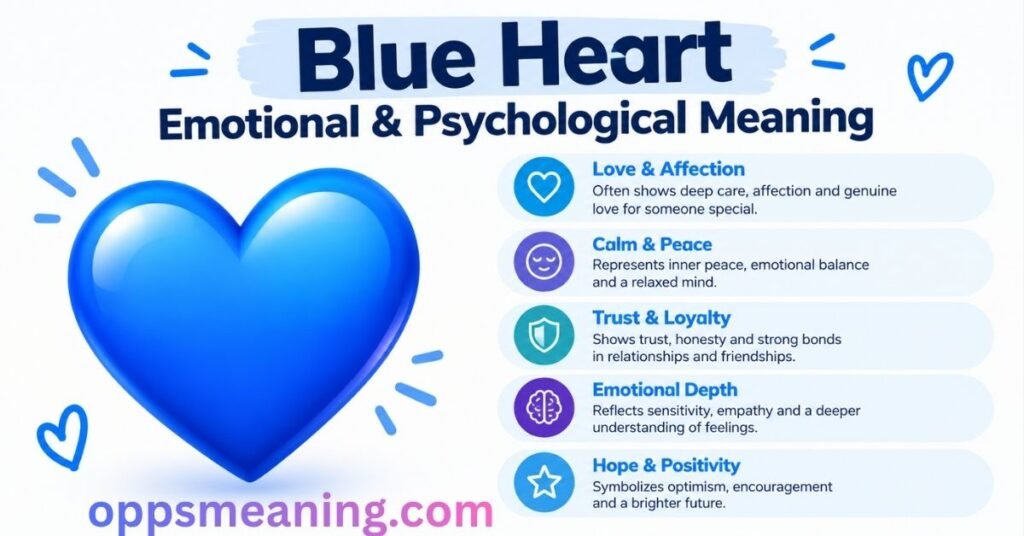
Every emoji taps into something psychological, whether we notice it or not. The 💙 leans into stability rather than intensity. If red feels like a spark, blue feels like a steady flame that doesn’t burn out.
People send it when they want the recipient to feel safe, supported, and valued. It expresses compassion without demanding anything back. That’s part of why it works so well in tough moments, congratulatory messages, and everyday check-ins. The emotional meaning of blue heart centers on reassurance more than excitement.
Personal Scenario
Picture this. Your best friend has had a brutal week at work. They text you just to vent. You reply: “Thank you for being there 💙.” That single line does a lot of heavy lifting. It says you’re heard, you’re supported, and you matter, all without turning the moment into something romantic or over-the-top.
Usage in Different Contexts
Context shapes almost everything about heart emoji meanings. The same 💙 can mean different things depending on who sends it and where the conversation happens.
Understanding these settings helps you avoid awkward mix-ups. It also helps you use the emoji with more confidence yourself, whether you’re replying to a friend or posting on social media.
Social Media
On public platforms, 💙 often shows support for a cause, a creator, or a friend’s achievement. It’s low-commitment and easy to use in comment sections without raising eyebrows.
Friends & Relationships
Among friends, the blue heart emoji friendship meaning usually boils down to three things: I appreciate you, I support you, and you matter to me. In romantic relationships, some couples also use it to represent steady, long-term loyalty rather than fiery passion. The blue heart emoji meaning in love here is calmer and more grounded than what red typically conveys.
Work or Professional Settings
Workplace chats are trickier. A blue heart might feel fine in a casual Slack message between coworkers who get along well. It’s a much riskier move in a formal email or with a client you don’t know well. When in doubt, skip it entirely in professional writing.
Casual vs Serious Tone
Casual: “Drive safely! 💙”
Serious: “Please submit the report by Friday.”
Even a friendly emoji like this one doesn’t belong in serious, formal messages. Save it for lighter exchanges.
When NOT to Use It
Some situations call for restraint, no matter how well-meaning the emoji is. Skip the blue heart when writing professional emails, communicating with clients, discussing legal or medical matters, sending formal academic work, or messaging someone whose reaction to heart emojis you simply don’t know yet.
Context always wins here. If there’s any doubt, leave it out and let your words carry the tone instead.
Common Misunderstandings
Not everyone reads emojis the same way, and that gap causes plenty of confusion. A few myths keep popping up around this particular symbol.
Clearing these up helps you avoid sending mixed signals, and it helps you correctly read what someone else meant when they sent 💙 your way.
It Doesn’t Always Mean Romantic Love
A lot of people assume every heart automatically means romance. That’s simply not true for blue. The significance of the blue heart emoji usually points toward friendship and support, not passion.
Color Can Change Meaning
Swap blue for red, and the entire tone shifts. The blue heart versus red heart emoji debate comes down to intensity. Red burns hot. Blue stays cool and steady. Different online communities also sometimes claim blue for specific causes or favorite sports teams, adding another layer of interpretation.
Context Is Everything
Getting 💙 from your best friend feels completely different from getting it from someone you’re dating. The sender, the recipient, and the history between them all shape what the emoji actually means in that moment.
Comparison Table
Here’s a quick side-by-side look at how different heart colors typically get used.
| Emoji | Meaning | Typical Tone |
| 💙 | Trust and friendship | Supportive |
| ❤️ | Love and romance | Passionate |
| 💚 | Nature or healthy living | Caring |
| 🩵 | Gentle affection | Soft |
| 💜 | Compassion or admiration | Warm |
| 🫶 | Appreciation and support | Encouraging |
Key Insight
People often choose 💙 specifically because they want to show genuine care or loyalty without pushing the conversation into romantic territory. Understanding heart emoji colors like this makes texting a lot less confusing.
Variations & Similar Heart Emojis
Hearts come in a lot of shades these days, and each one carries its own flavor. Knowing the differences helps you pick the right one, and helps you understand what others mean when they send them to you.
Here’s a quick rundown of the most common ones you’ll run into.
Red Heart
❤️ represents deep romantic love and passion. It’s the classic choice for couples and serious declarations of love.
Light Blue Heart
🩵 leans toward gentle, soft affection and calm care, similar to its darker blue cousin but even lighter in tone.
Purple Heart
💜 often signals admiration, compassion, or creative appreciation.
Green Heart
💚 connects to nature, health, and sometimes a more casual, easygoing friendship.
Pink Heart
🩷 brings sweet, warm affection, often used between close friends or new romantic interests.
White Heart
🤍 stands for purity, sincerity, and peace.
Black Heart
🖤 can mean dark humor, edgy style, or sometimes deep emotion expressed in a more serious way.
Brown Heart
🤎 suggests warmth, comfort, and groundedness.
Yellow Heart
💛 usually points to happiness and close, easy friendship.
Heart Hands
🫶 shows gratitude, encouragement, and appreciation, often used as a supportive gesture in comments.
How to Respond When Someone Uses 💙
Getting a blue heart and not knowing how to respond can feel oddly stressful. Don’t overthink it. Match the tone of the conversation, and you’ll be fine.
Below are a few reply styles depending on the vibe you’re going for.
Casual replies include: “Thanks!”, “Appreciate you!”, or “Right back at you 💙”
Funny replies include: “That’s my favorite color! 💙😂” or “Sending one back! 💙”
Mature replies include: “Thank you for your kindness” or “I truly appreciate your support.”
Respectful replies include: “Wishing you the best as well” or “Thanks for thinking of me.”
Regional & Cultural Usage
Communication styles shift depending on where you are in the world, and heart emojis are no exception. What feels normal in one culture might feel a bit much in another.
Here’s a general look at how different regions tend to use 💙.
Western Culture
In the West, the blue heart usually symbolizes friendship, trust, and emotional support, matching most of what we’ve already covered.
Asian Culture
In many Asian countries, the emoji shows up often in fan communities, family group chats, and close friendships, sometimes tied to specific idols or shows.
Middle Eastern Culture
Heart emojis get exchanged carefully in some Middle Eastern contexts, often reserved for family and close friends, depending on local norms around expressing emotion openly.
Global Internet Usage
Across the internet as a whole, 💙 has become a widely recognized shorthand for kindness and emotional connection, crossing language barriers pretty easily.
Gen Z vs Millennials
Gen Z often pairs 💙 with emojis like 🫶, 🥹, or ✨ to stack extra meaning into one message. Millennials tend to keep it simpler, sending 💙 on its own to express appreciation or loyalty without extra decoration.
Is It Safe for Kids?
Yes, completely. The blue heart emoji is considered family-friendly. Kids and teens use it all the time to show friendship, gratitude, and encouragement toward classmates and friends. That said, it’s still worth reminding younger users that emoji meanings shift depending on the conversation and the person on the other end.
FAQ,s
What does 💙 mean in a text message?
It usually shows friendship, loyalty, trust, or emotional support rather than romantic love.
Is the blue heart romantic?
Sometimes, but not usually. The blue heart emoji meaning from a girl or the blue heart emoji meaning from a guy typically points toward platonic care rather than romance, though close couples occasionally use it too.
What’s the difference between 💙 and ❤️?
💙 conveys calm trust and friendship. ❤️ conveys strong romantic love and passion. That’s the simplest way to separate the two.
Can friends send messages to each other?
Absolutely. It’s one of the most common hearts exchanged between close friends across every major platform.
Is it appropriate for work?
Only in very casual workplace chats. Skip it in formal emails or client communication.
Why do people choose a blue heart instead of a red heart?
Many people pick blue specifically because they want to express care or loyalty without suggesting romantic feelings. It’s a safer, calmer choice when the relationship doesn’t call for anything intense.
Conclusion
Understanding the blue heart in text meaning makes digital conversations a lot easier to read. In most cases, 💙 represents friendship, trust, loyalty, and quiet emotional support rather than romance.
Whether you’re cheering on a friend, thanking someone for their kindness, or simply showing you care, the blue heart gets the job done. It’s warm without being loud, sincere without being complicated. And now, the next time someone drops a 💙 in your chat, you’ll know exactly what they’re trying to say.

Ethan Brooks is a language writer who shares simple explanations of word meanings, grammar, phrases, slang, and everyday expressions. His goal is to make confusing language easy to understand with clear and helpful information.
One Comment